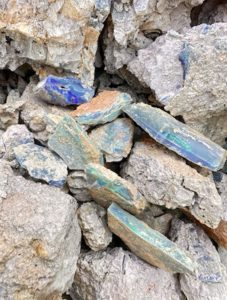
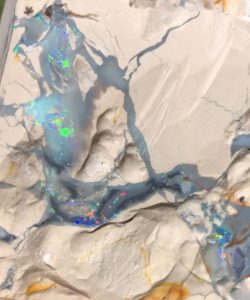
A Hidden Ribbon of Colour Beneath Grawin, Lightning Ridge
In the red earth of the Grawin Opal Fields, just outside Lightning Ridge, nature has been quietly working for millions of years.
Among the many forms Australian opal takes, one of the most fascinating is seam opal.
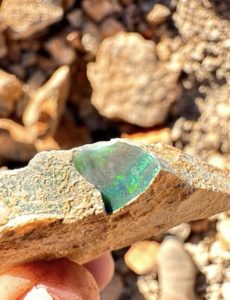
Unlike nobby opal, which forms in rounded nodules, seam opal develops in natural cracks and horizontal bands within the host rock. Over time, silica-rich water filters through ancient sedimentary layers. As the water evaporates, microscopic silica spheres settle and align — creating the remarkable play of colour that makes Lightning Ridge opal so prized around the world.
In our family mines at Grawin, discovering a seam is one of the most anticipated moments in trenching.
Sometimes it appears as a faint pencil line in the wall.
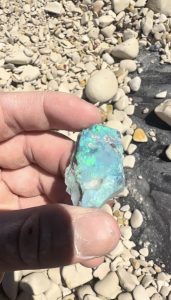
Sometimes as a glowing ribbon of electric green, gold or red running through the sandstone.
And sometimes it surprises us entirely.
No two seams are ever the same.
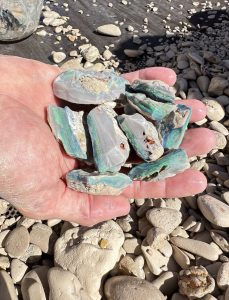
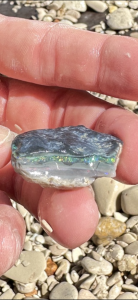
Some are thin and delicate, requiring careful extraction and skilled cutting. Others are thick enough to produce striking freeform pieces with colour showing from both sides. The unpredictability is part of what makes mining so humbling — and so addictive.
Why Seam Opal Is Special
- It often produces striking linear patterns
• It can reveal bright crystal or dark body tones
• It requires precision mining and cutting
• It tells a visible story of how opal formed in the earth
At Opals To You, every seam we uncover carries our family story with it — from the red dirt of the outback to collectors across the world.
When we’re fortunate enough to uncover something exceptional, we don’t just see a gemstone.
We see time.
We see earth.
We see possibility.
And we feel incredibly privileged to be part of that journey.
As we prepare for our next mining season at Grawin, we look forward to discovering what new seams may be waiting beneath our feet.
From Earth to Elegance.
— The Bressan Family
Opals To You